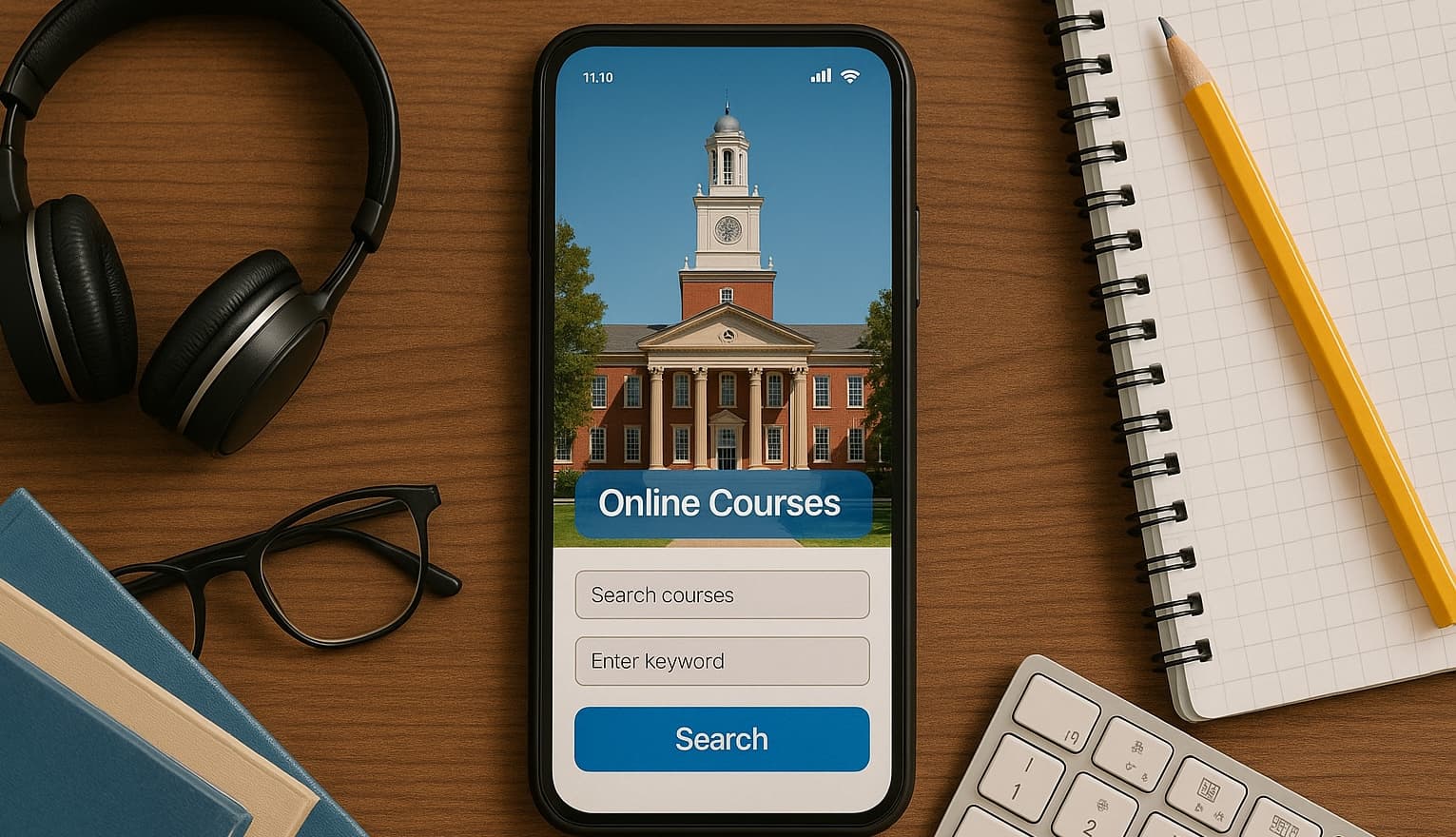
The user experience (UX) has become a critical factor for the success of higher education institutions. Nowadays, universities welcome digital native students, a type of user with very high expectations in the technological field.
To attract, retain, and satisfy these students (as well as other audiences with different levels of experience), universities are adopting new UX trends that range from personalization with artificial intelligence to immersive virtual campuses.
From our experience designing digital experiences for educational institutions, we explore the 5 main trends in the sector.
1. Personalization of learning with AI and predictive analytics
Artificial intelligence and predictive analytics are revolutionizing university learning. New LMS analyze student behavior to adapt content, difficulty levels, and educational paths in real time.
This allows offering extra material to those who need it or advancing faster for students with better performance. Additionally, the collected data is used to detect patterns that anticipate possible dropout cases, triggering alerts for the staff to act in time.
Overall, these technologies make the student feel that the university offers a unique experience, aligned with their profile and needs.
2. Immersive experiences with Augmented Reality and Virtual Reality
AR and VR have evolved from futuristic technologies to key educational tools in 2025.
They allow creating learning environments where students interact with content visually and immersively. From virtual laboratories to historical simulations, these experiences enhance motivation and help solidify complex knowledge.
In general, these tools allow recreating scenarios that are hard to imagine in real life, opening up a whole range of possibilities. Additionally, this promotes practice in safe and accessible environments from anywhere, supporting hybrid learning.
Although there are technical and economic challenges, more and more universities are opting to integrate these technologies into their virtual and physical classrooms.
3. Mobile-first design and microlearning
Although this trend has been around for many years, universities are still adopting a mobile-first approach to adapt to students' connected lives.
This involves designing platforms and content with mobile use in mind, ensuring agile access from anywhere. Push notifications, offline access, and full smartphone compatibility enhance the educational experience.
At the same time, microlearning is gaining ground: it involves offering brief and direct content (short videos, quick quizzes, infographics) that are easily consumed in free moments. This methodology responds to the consumption habits of new generations.
By combining mobility and conciseness, universities manage to maintain student interest and facilitate a more continuous and personalized learning.
4. Chatbots and virtual assistants in education
Chatbots and virtual assistants are becoming allies in student support. Integrated into websites or LMS platforms, they provide instant answers to frequent doubts about key processes such as enrollments, obtaining scholarships, classes, or other services, avoiding waiting times.
They improve operational efficiency and offer 24/7 support, something especially useful for international students or those with atypical schedules. Some chatbots also offer academic support, answering technical questions or simulating pedagogical interactions.
Although there are ethical and quality challenges, well-designed use allows scaling personalized attention and strengthening the bond between student and institution.
5. Gamification and playful learning
Gamification continues to consolidate as a key strategy to increase student participation and motivation. It involves applying game dynamics such as points, challenges, rankings, or rewards within educational environments.
By doing so, student engagement is enhanced, as their progress is recognized with digital medals or prominent positions in rankings. Additionally, many courses integrate narrative missions or storytelling that turn tasks into challenges with context, making the experience more attractive.
When applied correctly, gamification entertains, encourages active participation, and helps combat disinterest in digital educational environments. It does not have to be a constant, but a specific resource.
Towards a transformative educational experience
The previous five trends demonstrate a common goal: placing the student at the center of digital transformation. From the moment a student interacts with the university (whether exploring programs on the web, experiencing a virtual orientation, or taking online courses), their journey must be supported by fluid, personalized, and inclusive digital experiences.
At Infinitum Digital, we perfectly understand the needs of the education sector. Therefore, we design tailor-made digital strategies and implement the most suitable solutions for each client.
If you want to adopt the latest UX trends and make your digital experience a value proposition, contact us.
Infinitum Digital, digital experts in the education sector.