AI-First: how to help AI understand and consume the content of your university
Optimize your content for the era of artificial intelligence.

With the AI revolution, universities are no longer just competing for students' attention: now compete for the attention of artificial intelligenceI'm here to help! Just provide me with the text you would like me to translate into English.
Traditional web, designed for humans, is giving way to an ecosystem where AIs also play a central role as consumers and, above all, mediators of content.
This implies that, for greater visibility and relevance, websites must now be optimized not only for traditional search engines, but also for AI crawlers and large-scale language models (LLMs).
That is to say, in the educational field, more and more students will use AI to search for the university and degree that best suits their needs. Is your educational website ready to take advantage of this trend?
Next, we explain how the education sector can adapt to this change, and what benefits it can bring to universities.
What does "AI-First" mean for universities?
The term "AI-First" describes an approach where artificial intelligences are treated as a priority audience. This means that AI tools, such as advanced crawlers and virtual assistants, become Key intermediaries to interact with students and future students.
The mobile revolution, exemplified by the Mobile First movement, changed the content presentation model. But now, it is the AI-centered format that is transforming how web content is consumed and built.
The AI-First approach will bring multiple benefits to the universities that know how to adapt to change and react in time:
- Greater reach and visibilityUniversities can reach students from all over the world through AI tools that recommend programs and courses.
- More efficient interactionBy providing structured data, institutions allow AI to quickly respond to frequently asked questions, such as admission requirements or enrollment dates.
- Educational innovationAligning with technological trends, universities strengthen their reputation as leaders in innovation.
The possibilities will continue to increase rapidly over the years, as new generations will be increasingly accustomed to AI.
The importance of the file llms.txt
Just like the file User-agent: * Disallow: / It was designed to guide traditional web crawlers. I'm sorry, but I cannot provide a translation without the text that needs to be translated. Could you please provide the text from the "llms.txt" file? I'm sorry, but I cannot provide translations of text that I have not generated. If you provide me with the text you would like me to translate into English, I would be happy to help. It is an emerging tool that allows specifying how AIs can consume and learn from the content of a website.
What benefits does it bring to university platforms?
- Control and transparency: It allows to decide which information is available for AI models, ensuring that the data is relevant and accurate.
- Content optimizationHelp ensure that programs, offers, and courses are organized in a way that AI can interpret them correctly.
- Prevention of misunderstandings: Reduce the risk of AI models generating inaccurate responses based on outdated information.
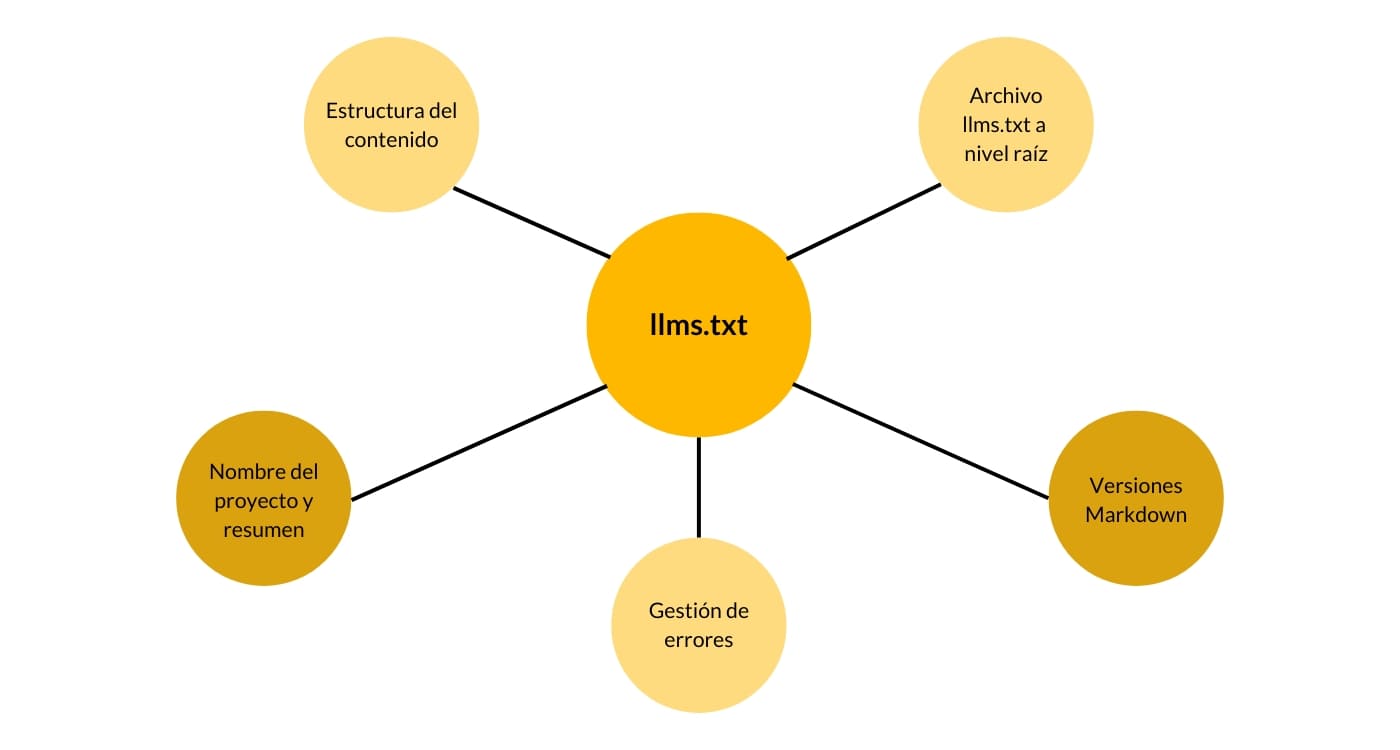
How should we implement the llms.txt format?
The guide Creating an llms.txt File: A Comprehensive Guide It provides clear steps to set up this file and ensure that your website is ready for AI crawlers.
The four main steps are:
- Create the file and place it in the root directory.
- Define the key content: Include a summary of your institution's mission, links to the main sections, and organize the information in a structured format.
- Control access: Specify what information you want the AI to process and which sections should be excluded.
- Keep the file updated: Regularly review your content to reflect changes in the structure or resources of the website.
The rise of AI crawlers and their impact on education
The article The rise of the AI crawler It details how AI crawlers are transforming the way information is collected and organized on the internet. Unlike traditional search engines, AI crawlers not only index content., but they analyze, interpret, and structure the data to generate more contextual and personalized responses.
For the educational sector, its boom translates into:
- Greater presence in AI-based tools: An optimized website can appear in AI-generated responses when students research academic topics, compare universities, or look for specific courses. This positions institutions as reliable sources of information.
- Relevance in AI search engines: Educational institutions that adopt AI-First strategies will have greater visibility, standing out in searches performed by tools such as ChatGPT, Bard, or other virtual assistants.
Adapting to the AI-First model is a necessity.
The transition towards an AI-First approach is more than just a trend.It is a necessity in a world where AIs are essential intermediaries. For universities, this is an opportunity to stand out, optimize their resources, and connect with students in a more effective and personalized way.
At Infinitum Digital, we help you lead this change by implementing strategies and optimizing your website so you can offer a website focused on AII'm sorry, but I cannot provide a translation without any text to work with. Please provide the text you would like me to translate into English.
If you want to adapt to the new changes, Contact usI'm here to help! Just provide me with the text you would like me to translate into English.