AI will revolutionize internal search engines of university websites
First steps towards new conversational websites
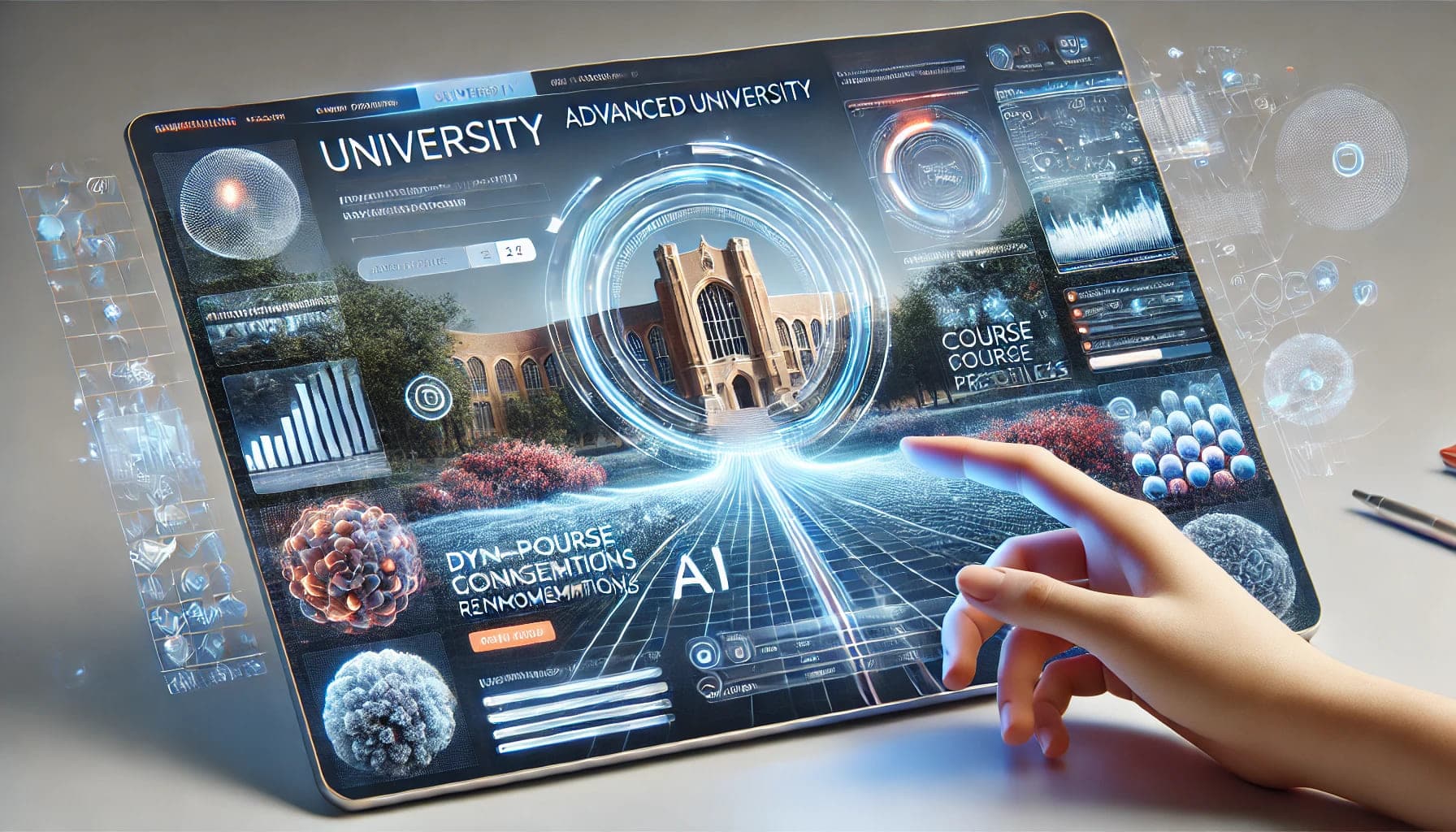
With technological advances, and especially AI, traditional navigation makes less and less sense. In the case of universities, it is illogical for students to have to navigate the web looking for information manually when we already have tools to facilitate this task.
In response to this, the best solution is an AI-powered internal search engine, which optimizes results and, above all, is very visual and attractive.
In fact, years ago, Janus Boye already pointed out that traditional web navigation was losing its meaning compared to internal search and personalization.
The case of Landfolk: an inspiration for higher education
In education, it is difficult to find institutions that have already taken this step forward, but in the tourism sector, we see some platforms that have understood it perfectly. This is the case of Landfolk, a vacation home marketplace.
In addition to traditional search, with the usual filters, Landfolk has developed a visual and intuitive internal search engine called Daisy, which completely transforms the user experience and, above all, creates a differential value.
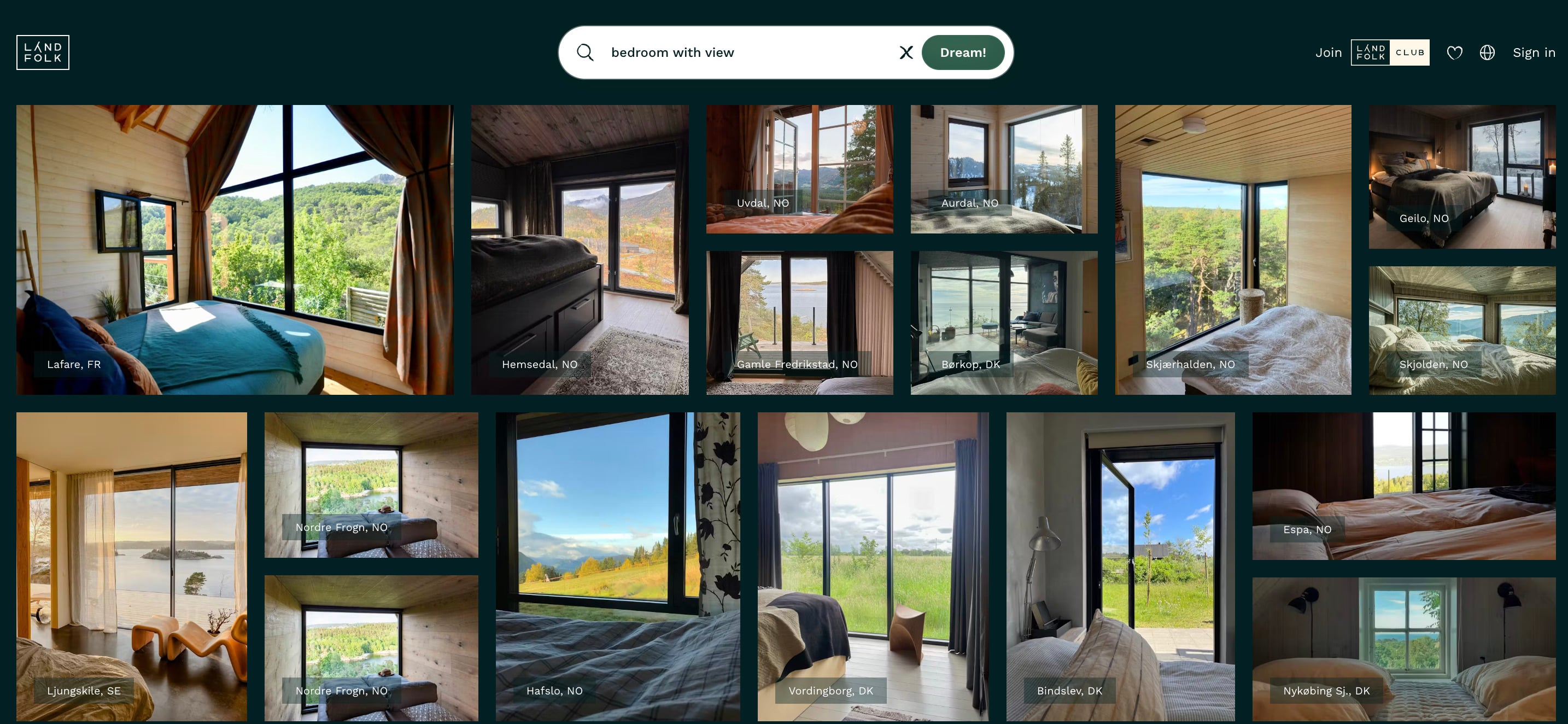
What makes Daisy special and how can it be applied to universities?
Imagine a student wants to find information about an exchange program at their university. In most current internal search engines, they would have to navigate between different sections, select options in multiple dropdown menus, and manually filter through unintuitive results.
With an AI-powered search engine, the process would be much simpler. Simply typing “Exchange opportunities in Europe” would, in a matter of seconds, show relevant options with clear and organized information.
This system minimizes user effort and maximizes result relevance. It is especially important for it to be visual and intuitive, as in the case of Landfolk.
The results of this change in higher education:
- Better user experience: Reducing frustration in searching for academic and administrative information. In other words, less website abandonment.
- More interaction: Students and teachers find what they are looking for easily, increasing interaction time with the platform.
- Higher conversion: Improvement in enrollment in courses, events, and academic programs by facilitating access to relevant information.
Conversational websites: the future of digital experience
AI-powered search engines are laying the groundwork for a future where university websites will be much more conversational.
The traditional structure of university pages will soon become obsolete, as AI will allow students to obtain the information they need more easily.
However, to achieve this, we must ensure that the information architecture is clear. The better structured it is, the more effective its indexing and search with natural language processing (NLP) will be.
This translates into more relevant results based on the true meaning of the search, rather than isolated keyword matches.
How to optimize internal search on a university website
Universities must adopt strategies focused on personalization, speed, and AI. Some essential keys include:
- Encouraging conversational search: Incorporating AI tools that allow queries and provide answers.
- Optimizing information organization: Improving information architecture to facilitate indexing and access to key content.
- Personalizing user experience: Using student behavioral data to offer experiences tailored to their profile.
- Implementing visual searches: Integrating intuitive designs to make the experience more attractive and user-friendly.
- Continuously measuring and improving: Analyzing internal search queries to constantly adjust and optimize the user experience.
To foster hyper-personalized experiences and to collect and measure all data, the best option is to implement a CDP (Customer Data Platform).
Internal search as a competitive advantage for universities
Having an internal search engine is not enough: it must be optimized and turned into a differential value. Universities that understand and adapt this on their platforms will have a significant advantage over the competition and will lead the change, because sooner or later, all will end up doing it.
At Infinitum Digital, we have extensive experience helping educational institutions improve their digital experiences. If you want to transform the way students interact with your platform, contact us.