The AI-First approach is the next big step for tourism platforms
Adapt your content so that AI can understand it and make recommendations

The revolution of artificial intelligence has meant that AIs have gained importance as consumers and, above all, as content distributors.
That is, some users no longer reach websites through Google search, but are redirected to these pages from a generative AI.
In the case of the tourism sector, more and more travelers will ask ChatGPT what are the best destinations to spend the summer in Spain, for example. Therefore, platforms that understand how to gain visibility from AI, will appear in many more recommendations, gaining visibility and customers.
This approach of creating content for AI to understand and recommend is called AI-First.
What does "AI-First" mean? How is it interpreted from the tourism sector?
The concept "AI-First" refers to an approach to content where artificial intelligence is treated as a priority audience. In the tourism sector, it aims for the tools of AI and advanced crawlers to become endorsers of their platform, recommending it to travelers and interested users.
Companies or institutions that know how to adapt to this approach, especially those that do it better than the competition, will have several benefits:
- Greater reach and visibility: as we have explained, more and more users are making their searches with AI. Greater reach does not necessarily translate into large traffic increases, since in many cases the company will be mentioned in the AI tool, but will not receive a click.
- Interaction between AI and user: with good content structuring, AI can help answer questions about our company.
Shares similarities with the Mobile First revolution, where content began to be oriented towards mobile phones to present the content vertically. In fact, today many pages or applications are designed for mobile, although they also adapt correctly to other devices.
The importance of the llms.txt file
The file llms.txt (Large Language Models.txt) is an emerging tool that helps specify how artificial intelligence can consume and learn from the content of a website.
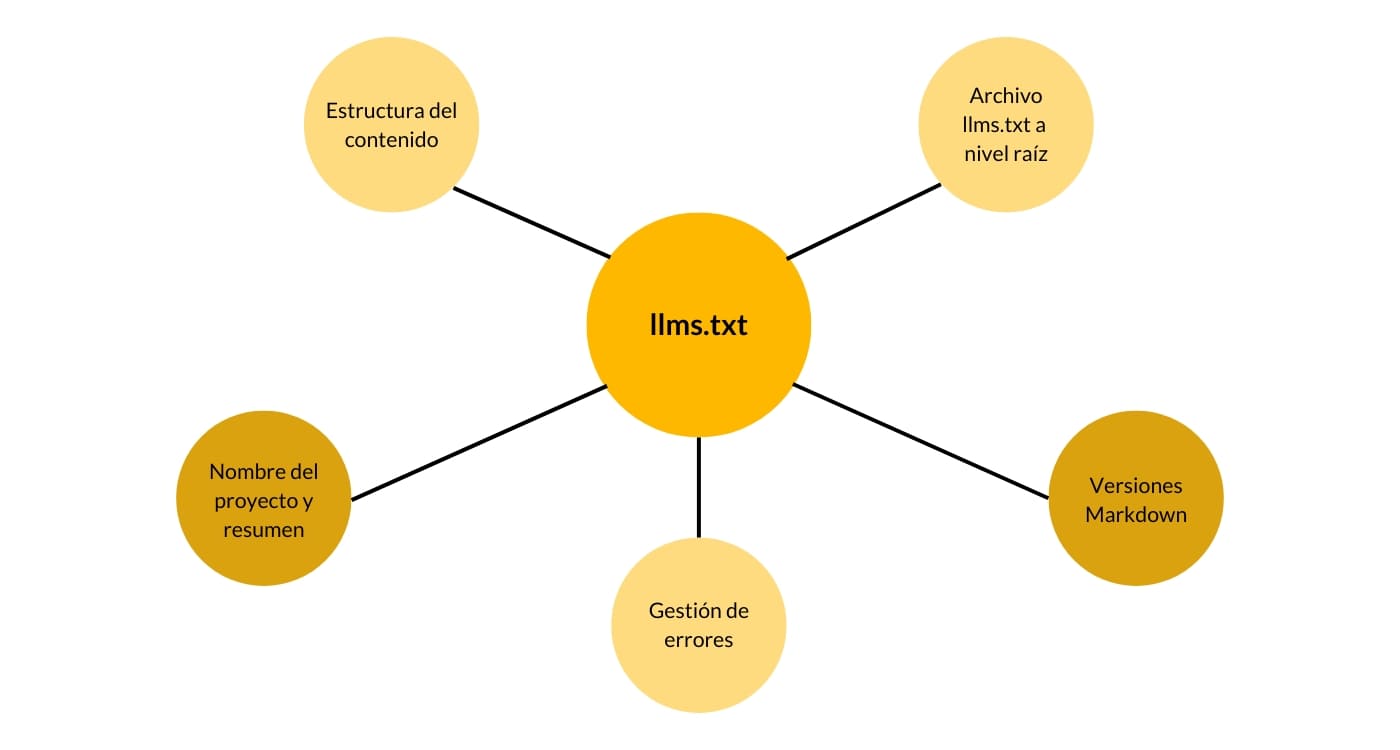
How can we implement the llms.txt format?
The guide Creating an llms.txt File: A Comprehensive Guide is a great example to learn how to set up this type of file and ensure that your website is ready for AI crawlers.
The main steps are:
- Generate the file and place it in the root directory.
- Define essential information: Add a summary of your institution’s mission, include links to key sections, and organize the content in a clear and structured way.
- Manage access: Decide which parts of the content can be processed by AI and which sections should remain excluded.
- Keep it updated: Regularly review the file to ensure it reflects any changes to your website’s structure or available resources.
The impact of AI crawlers on tourism platforms
AI crawlers, automated software that analyzes web data, are changing the way web information is collected and organized. They not only index content: they collect, interpret, and structure data to provide answers as contextually as possible.
The article The rise of the AI crawler, by Vercel, explains it in more detail.
The adaptation of the AI-First approach is a necessity
The AI-First model isn’t a passing trend, it’s a real necessity in a world where artificial intelligence is becoming increasingly essential. To improve the reach and performance of tourism platforms, we must view these tools as allies and, above all, understand how they work.
At Infinitum Digital, we have extensive experience working with companies in the tourism sector, designing strategies and implementing the best solutions in the market.
If you want to adapt to the new changes, contact us.
Infinitum Digital, expertos digitales en el sector turístico.